How Much Does Custom Solid Wood Furniture Cost in Malaysia?
Custom solid wood furniture in Malaysia comes in wide price ranges – it can start off somewhere in the RM100s and can stretch all the way until even RM10,000 & beyond. It all depends on the piece, wood species, and complexity of the design. A simple solid wood coffee table usually sits at the lower end, while a large dining table or built-in storage piece costs more because of material volume and joinery work. Below, we break down exactly what drives the price — and walk through a real piece we built at The Wood Place so you can see where the numbers actually come from.
Why Custom Furniture Pricing Varies So Much
Unlike flat-pack furniture, custom solid wood pieces don’t have a fixed price tag because every piece is a different combination of these four factors:
1. Wood Species
Different timbers have different costs per board foot, mostly due to availability and density. As a general pattern in the Malaysian market:
- Local/plantation species (e.g. rubberwood) — generally the most affordable, but comes jointed using smaller planks, which means more visible joints on larger surfaces
- Mid-range hardwoods (e.g. melunak, nyatoh, KSK) — moderate cost, with richer natural grain and character
- Premium hardwoods (e.g. chengal, balau, merbau) — higher cost, prized for density and longevity
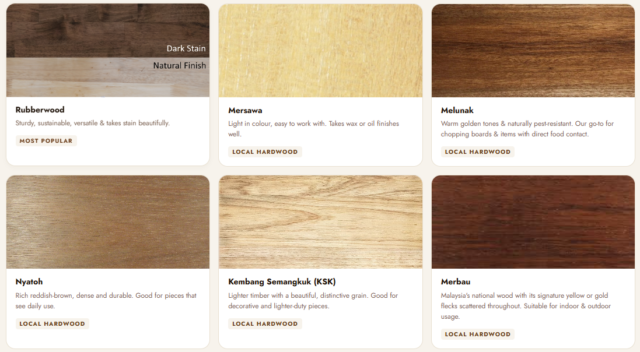
Different types of Malaysian solid wood for furniture
2. Size and Material Volume
This is the most straightforward driver: a side table needs far less timber than a 6-seater dining table. Larger pieces also typically require thicker stock to stay structurally sound, which compounds the material cost.
3. Joinery and Construction Method
Furniture built with traditional joinery (mortise-and-tenon, dovetails, etc.) takes more workshop hours than furniture assembled with screws, brackets, or dowels. Hand-cut joinery is part of what makes solid wood furniture last for decades — but it’s also labor, not just material, that you’re paying for.
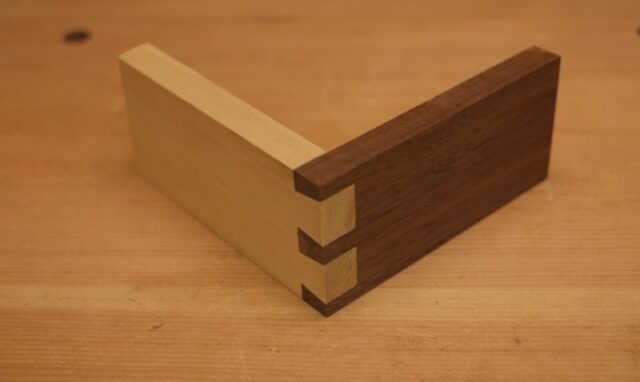
Example of dovetail joinery (image from Craftsy.com)
4. Finish and Detailing
A clear oil or wax finish is quicker to apply than a multi-coat lacquer finish, or detailing like carving, inlays, or curved (rather than straight) edges. Custom shapes and decorative elements add workshop time on top of the base build.
What’s Included in a Custom Furniture Quote at The Wood Place
- Initial consultation (in-person or via WhatsApp) to discuss size, wood, and use case
- Design sketch or reference confirmation before any cutting begins
- Material sourcing and preparation
- Build, joinery, and finishing
A Real Project: The Melunak TV Cabinet & Coffee Table Set
A young woman who’d just moved into a new apartment came to us with a clear vision: she wanted a TV cabinet and coffee table set that matched the dark wood tone she’d already built her interior around. Not “any dark furniture” — a specific aesthetic, and pieces that would visually belong together.
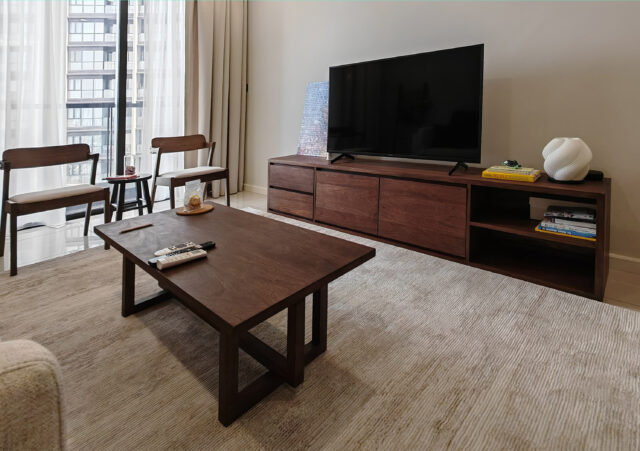
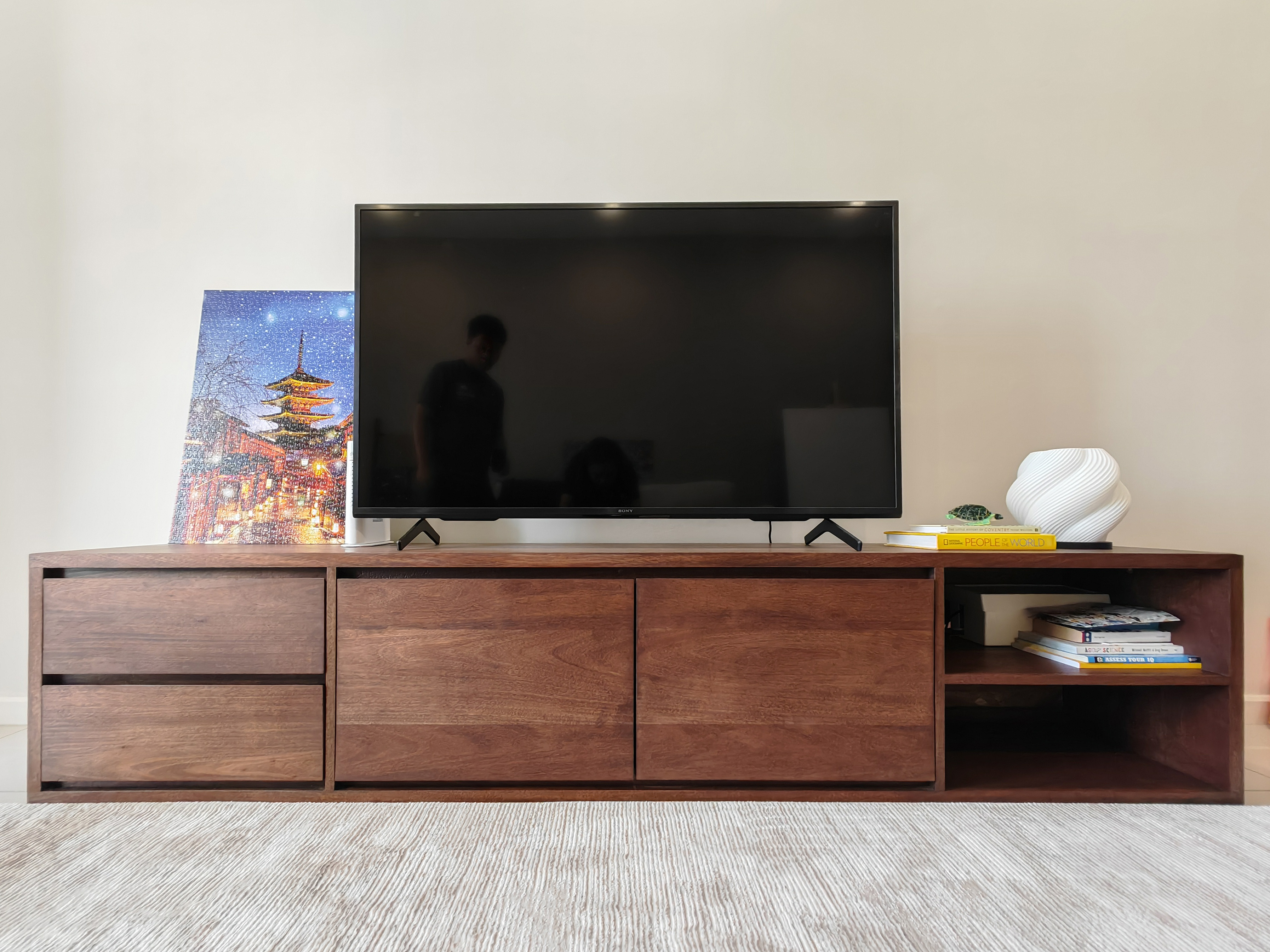
Matching Melunak TV Cabinet & Coffee Table Set – Finished in Dark Stain
Choosing the Wood
We chose melunak, a mid-range hardwood, for two reasons. First, its grain is genuinely beautiful — it has character that a plainer wood can’t fake. Second, melunak is naturally on the darker side already, which meant staining it to an even deeper walnut tone came through clean and even, rather than fighting the wood’s natural color.
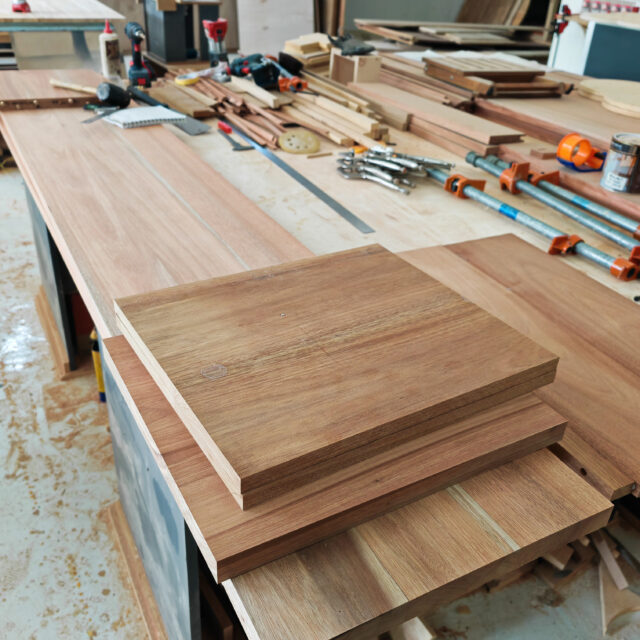
Naturally, melunak has a darker tone compared to many other types of solid wood in Malaysia.
We could have used rubberwood instead — it’s easier to work with because it comes in larger boards. However, that convenience would have shown up visually: rubberwood consists of more smaller planks, meaning more finger joints across a large surface like a cabinet front. With that on a piece this size, that many visible joints start to look busy rather than intentional. For a feature piece in someone’s living room, that trade-off wasn’t worth it.
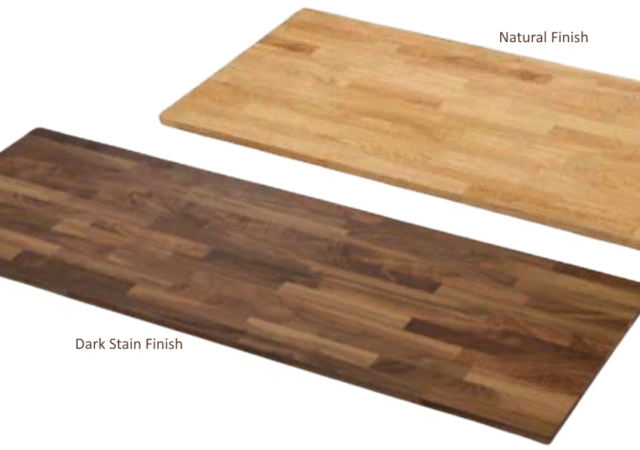
Rubberwood boards are good solid wood & easy to work with, but they are comprised of many small planks and have many joint lines
The Challenge: Keeping the Grain Honest
Solid wood like melunak doesn’t come in large boards the way manufactured panels do. To get a single cabinet front or tabletop at the size needed, individual planks have to be laminated and jointed together — which immediately raises the question of how those seams will look once assembled.
Our design intention from the start was to keep a continuous, unbroken grain line across the TV cabinet front. That meant the cabinet doors all had to be cut from a single piece, so that when everything closes, the grain reads as one continuous surface rather than a patchwork of mismatched pieces. It’s a small detail, but it’s the difference between furniture that looks assembled and furniture that looks like it grew that way.
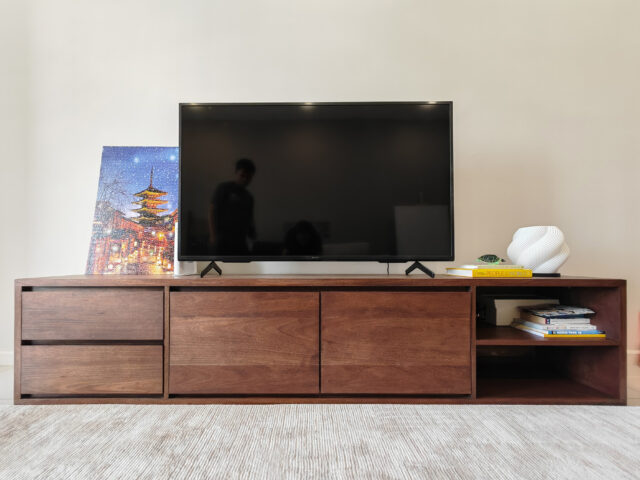
The cabinet door fronts of the Melunak TV Cabinet was made using a single piece in order to ensure grain continuity
The Build
We laminated the melunak planks into the large boards needed for the cabinet and tabletop, then assembled everything using dowel joinery instead of screws — so there are no visible screw holes anywhere on the finished piece.
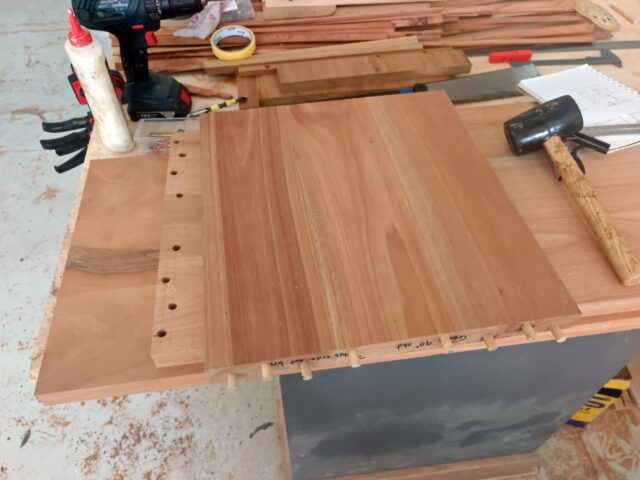
Preparing to assemble the cabinet sides through dowel joinery
For the coffee table, we used wood from the same batch of melunak for the tabletop to keep the tone and grain consistent with the cabinet, and routed the legs slightly to ensure they could comfortably handle the table’s load-bearing needs.
The Result
The finished set became, in the customer’s words, the feature of her living room — exactly the effect she was hoping for when she first reached out. The continuous grain across the cabinet front and the matching tone between both pieces gives the space a sense that the furniture was designed for that room specifically, not picked off a showroom floor.
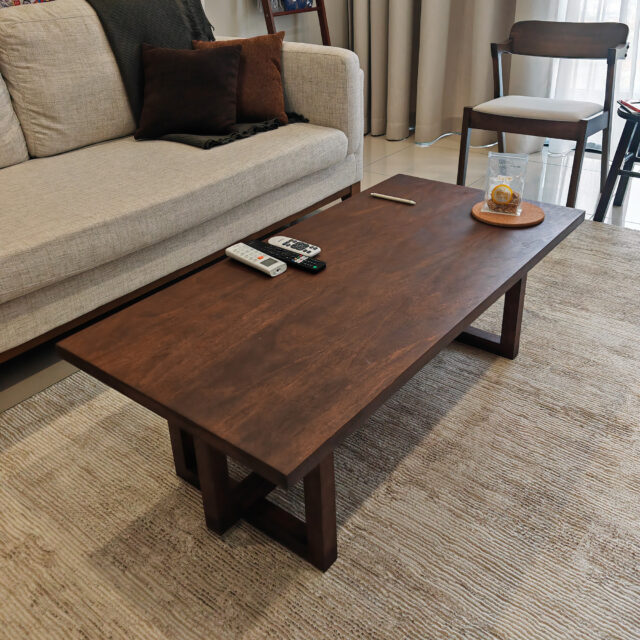
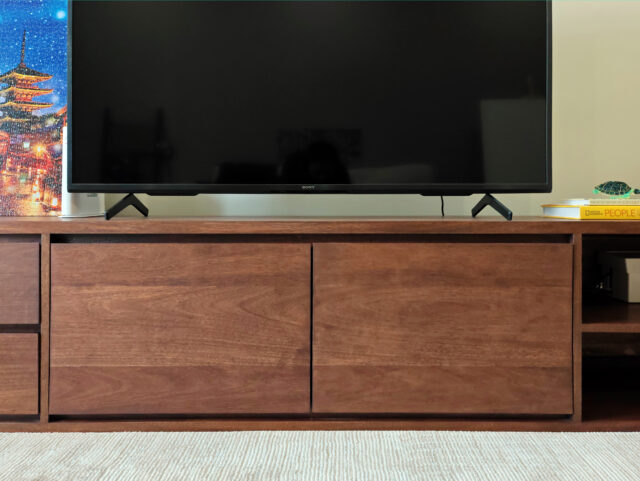
This project took longer than our typical build — closer to the upper end of our production timeline — because of the joinery work and the extra care needed to plan which plank went where to preserve the grain match. It’s a good example of how the “simple-looking” pieces are sometimes the most technically demanding ones.
(Have a similar vision for your own space? Send us a photo of your interior and we’ll talk through what wood and finish would suit it.)
Custom Furniture vs. Ready-Made: A Quick Comparison
| Custom Solid Wood (The Wood Place) | Ready-Made / Flat-Pack | |
|---|---|---|
| Material | Solid wood, chosen by you | Often veneer, MDF, or particleboard |
| Fit | Built to your exact space and use | Fixed standard sizes |
| Lifespan | Decades, with care | Often years, not decades |
| Lead time | 2–6 weeks, depending on complexity | Usually in stock or short wait |
| Price | Higher upfront | Lower upfront |
This isn’t to say ready-made is “wrong” — it’s a genuine trade-off between upfront cost and long-term value, and the right choice depends on how long you plan to keep the piece and how much the exact fit matters to you.
How Long Does Custom Furniture Take to Build?
Most pieces take 2–3 weeks from confirmed 3D drawings to completion. More complex builds — like the melunak set above, which required careful lamination and grain-matching across multiple planks — can take 6-8 weeks.
Getting an Accurate Quote
Because every piece is different, the most accurate way to get pricing is to send us your idea directly rather than relying on a general price list. A quick WhatsApp message with your rough dimensions, intended use, and any reference photos is usually enough for us to give you a realistic estimate.
Ready to start your custom piece?
Browse what we build at Custom Furniture, or message us directly on WhatsApp with your idea — no design experience needed, just tell us what you have in mind (: